


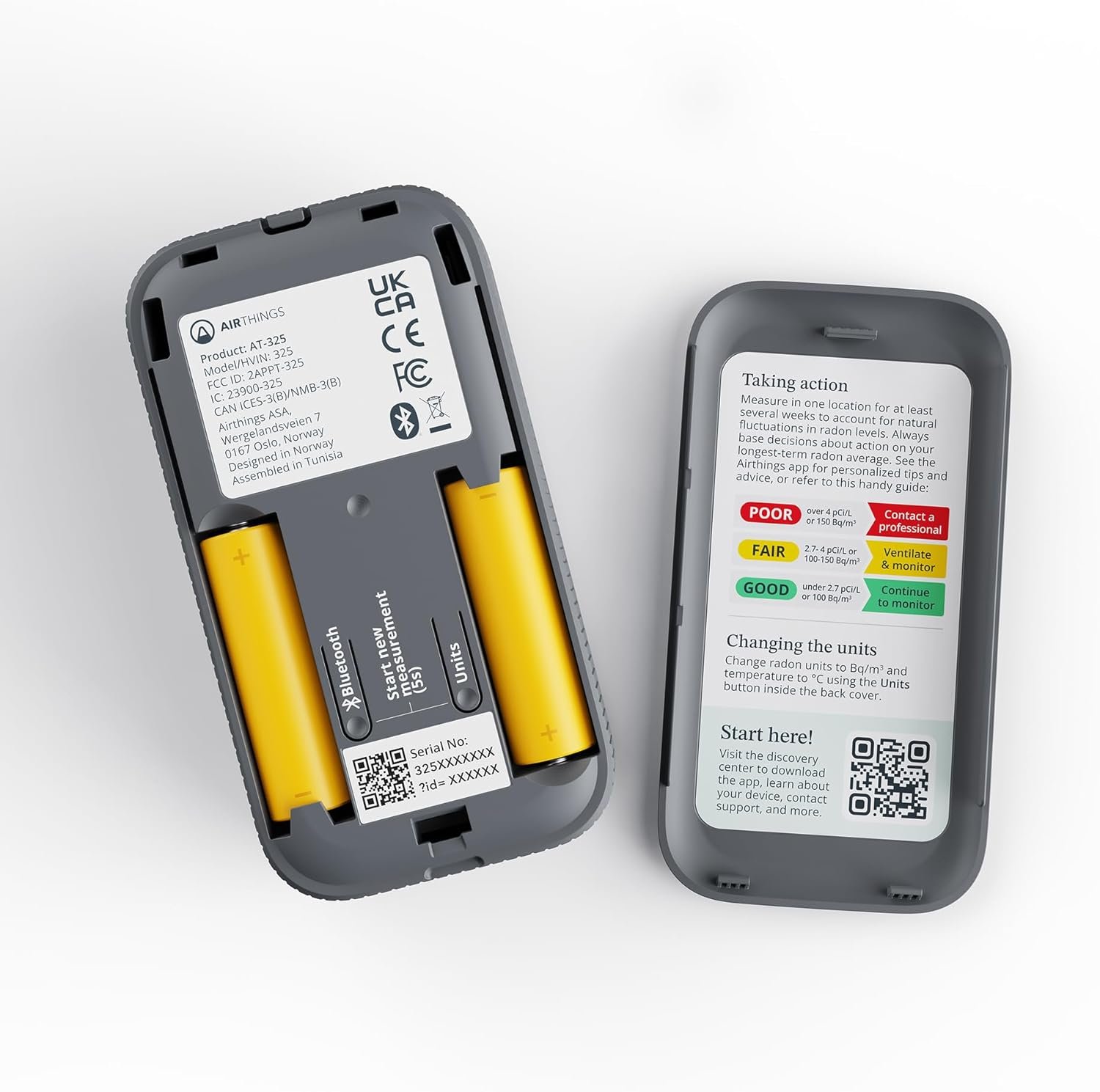
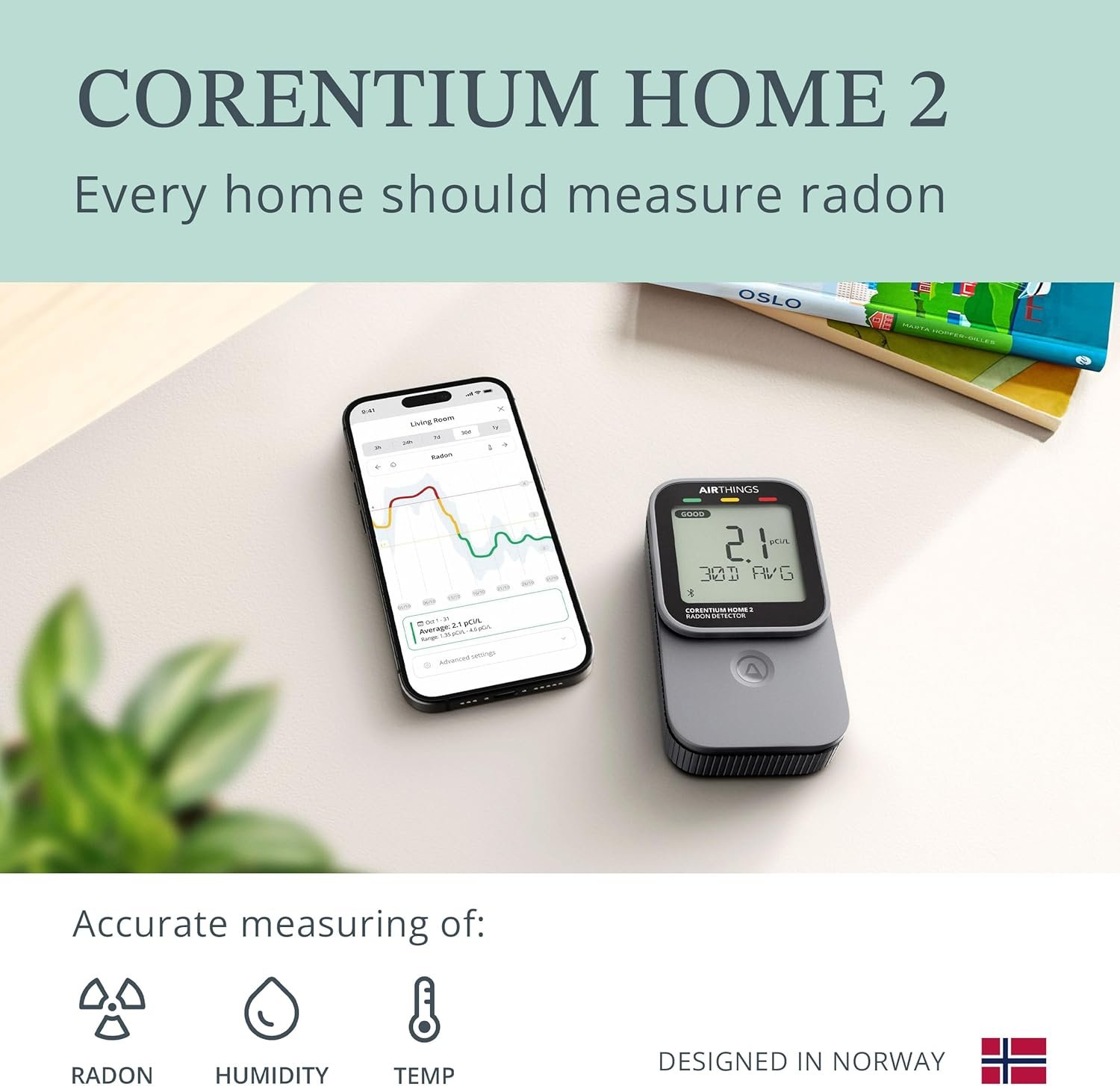
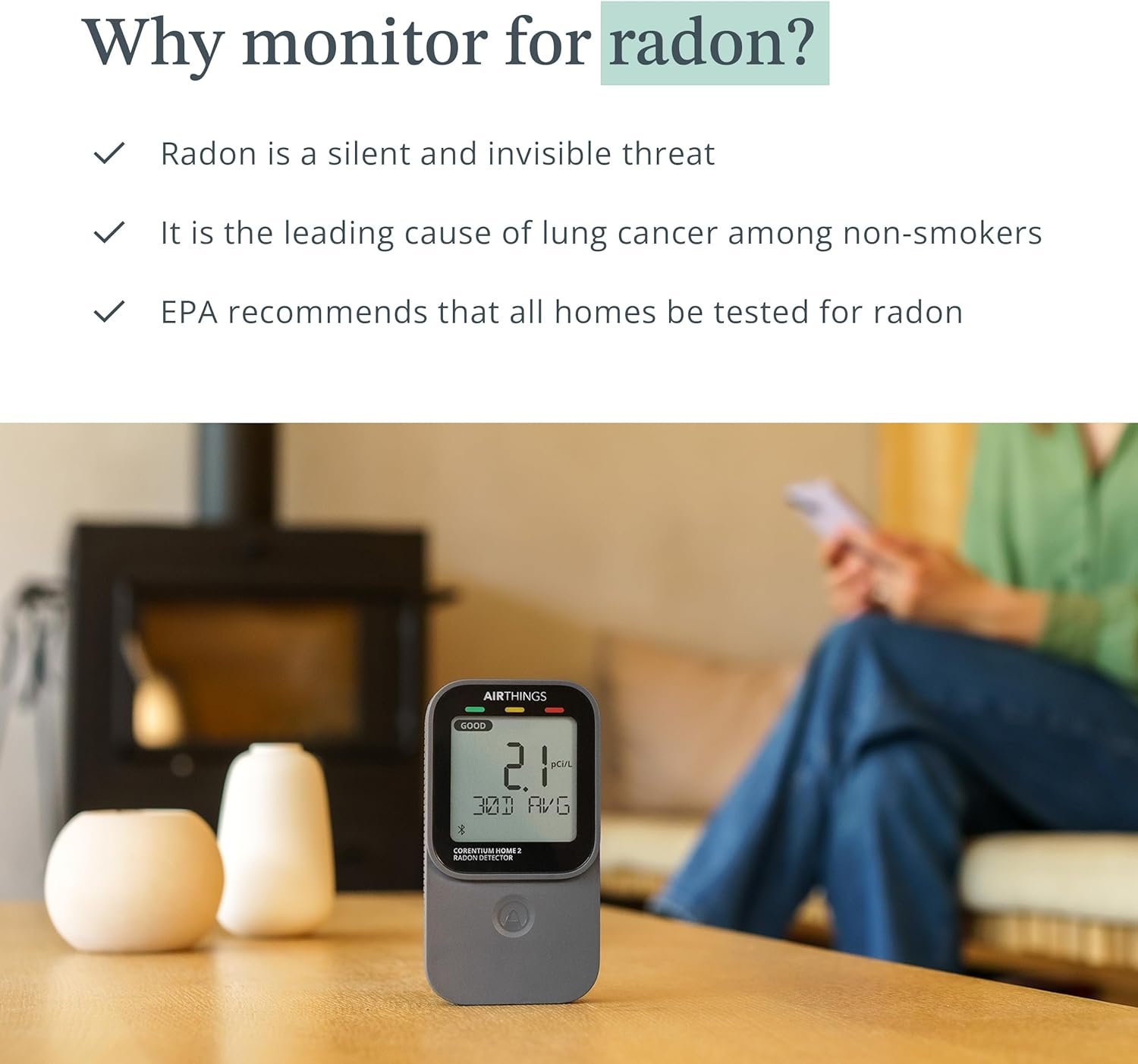


Airthings 325 Corentium Home 2 Smart Digital Radon Detector – Portable and Easy-to-use Radon Testing with Bluetooth connectivity and Humidity & Temperature Sensors
Original price was: $249.99.$179.99Current price is: $179.99.
Price: $249.99 - $179.99
(as of Jul 04, 2025 11:25:26 UTC – Details)
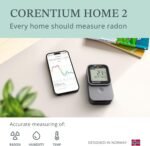
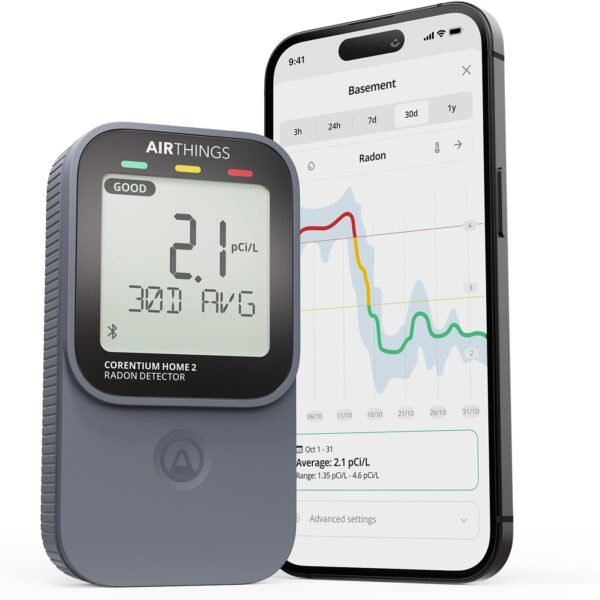
In 2011, Airthings revolutionized home radon detection with Corentium Home, setting the benchmark for reliable, continuous monitoring. Corentium Home 2 builds on that legacy, offering the same trusted accuracy with the added advantage of Bluetooth connectivity with the Airthings app, as well as bonus temperature and humidity sensors. Its redesigned, easy-to-read display presents short and long-term radon averages alongside current environmental readings. With simple GOOD, FAIR, or POOR indicators, understanding your home’s air quality is immediate and effortless. For deeper insights that go beyond the numbers, connect to the Airthings app. Access interactive graphs that visualize radon fluctuations over time, know when to take short-term actions to counteract rising levels, and get practical advice for keeping your home healthy long-term. Pairing with an Airthings Hub or View series monitor unlocks 24/7 remote monitoring, giving you real-time data and notifications—wherever you are. Corentium Home 2 offers not just information, but the confidence and tools to safeguard your home’s air quality effectively.
THE ORIGINAL RADON DETECTOR, UPDATED: The same proven accuracy as the best-selling original Corentium Home, now with Bluetooth connectivity and bonus temp and humidity sensors.
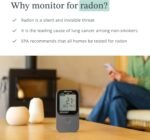
LONG TERM MONITORING: Monitor for cancer-causing radon gas continuously to stay informed. No lab fees, no waiting—just always-available, reliable results.
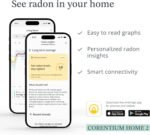
“SEE” RADON IN YOUR HOME: The app’s graphs show how radon rises and falls. Take actions to reduce levels. Keep monitoring to ensure they stay low.
PERSONALIZED TIPS: Get tailored advice to confidently address your home’s radon levels. Less doubt, more peace of mind.
TRUSTED BY PROS: Get the power of Airthings’ patented radon sensing technology used and recommended by thousands of radon professionals and home inspectors.
Customers say
Customers find the radon detector works well and is easy to use, requiring no configuration, with accurate readings comparable to professional tests. The device provides both short-term daily and long-term average measurements, offering peace of mind particularly in basement use. Customers appreciate its value, noting it’s cheaper than professional testing, and find it well-made and reliable.
4 reviews for Airthings 325 Corentium Home 2 Smart Digital Radon Detector – Portable and Easy-to-use Radon Testing with Bluetooth connectivity and Humidity & Temperature Sensors
Related products


32GB FRAMEO 10.1 Inch Smart WiFi Digital Photo Frame 1280×800 IPS LCD Touch Screen, Auto-Rotate Portrait and Landscape, Built in 32GB Memory, Share Moments Instantly via Frameo App from Anywhere
In stock

3PCS Outdoor Solar Wall Light LED Motion Sensor Bright Flood Street Lamp 3 Modes
In stock


C23 Ultra 5G Unlocked Smartphone,6GB+256GB Fully Unlocked Cell Phone for Android 13, 6.8″ Unlocked Cell Phone, 6800mAh, 48MP+108MP Dual Camera/Dual (White)
In stock

LG QNED85 Series 86-Inch Class QNED Mini-LED Smart TV 86QNED85UQA, 2022 – AI-Powered 4K , Alexa Built-In, Grey
In stock

Moto G Stylus 5G | 2024 | Unlocked | Made for US 8/256GB | 50MP Camera | Caramel Latte
In stock
Rossetta Star Projector, Galaxy Projector for Bedroom, LED Night Light Aurora Projector with Bluetooth Speaker, White Noise, Timer and Remote, Room Decor, Gifts for Kids, Adults, Christmas, Birthday
In stock


tenor1 –
Accuracy … if you’re concerned about it read this.
I am a retired chemist so I’m concerned about radon emissions. I had absolutely no knowledge of this product or company until I found out that have a lot of radon in my new home. So, I purchased a model 223 a couple weeks ago and am using it to help me understand the situation while I wait for remediation. It’s doing a wonderful job of informing me of ‘hot spots’ and the average level throughout the house while I hold my breath.Now to its accuracy. The Corentium 223 specification is perhaps the most honest approach to accuracy I have ever seen in a consumer product. It’s based on: ‘sigma = less than [a percentage and the length of test]. It is statistical probability specification of accuracy and it is rich in accuracy information. However, you need to do the math, understand what ‘sigma’ means in variance statistics, understand probability distribution curves, and then the use the spec to calculate the worst case accuracy of the device associated with your own radon situation). So, please do that before you criticize the device. If you studied the specification and did the math, as I have, you would see that it is quite accurate for an inexpensive radon continuous monitoring device…. and way more than suitable for home use.Let me repeat that again. If you use the device as instructed by the manufacturer and are willing to trust the specification as determined by some very smart people who spent a lot of time, money and brainpower to prepare it, then you will be measuring Radon and its variability in your home in a way that is vastly superior to doing periodic mail away tests.The radon in your home varies from day to day, month to month, hour to hour. The anecdotal ‘evidence of accuracy’ presented in virtually all of these reviews is absolutely without merit. Why, because determining the accuracy of the device against a standard source is extremely complicated. As a chemist I know that for a fact. We, as customers, do not have the time, money, equipment, or knowledge to do it – period. If you are somehow guessing that you need better accuracy in a shorter period of testing then please consider buying the Corentium pro for $1200 or perhaps some other professional device. You may not get better accuracy but you will likely get equivalent accuracy in a shorter period of time…. that’s how the statistics work. Please read the last two sentences again.Consider this too. The manufacturer, Air Things, is based in Europe and it appears to be a spin off of CERN in Geneva, Switzerland. Look up CERN in Wiki. You will be impressed. They are the world’s leading experts on making and measuring radiation. I am impressed because their ‘no calibration necessary’ technology for this device (and their more expensive professional models) seems to be the result of a micro miniaturized, more precise spectroscopic technology for measuring radioactive decay of radon daughters alpha particle emissions.Finally, I’ve read literally hundreds of these Amazon reviews where accuracy is mentioned… and actually is somehow mysteriously determined in the basement of their home. However, I’ve not seen one review that references the manufacturer’s specification. Everyone here that’s comparing ‘this to that’ or ‘that to this’ and making claims about ‘accuracy’ doesn’t have a clue what they are talking about. However, a number of thoughtful reviewers seem to have run side by side tests with other devices or mail away canisters. Assuming those tests were done properly, then they can be considered slightly helpful but otherwise of no use in determining the device’s accuracy.I’m going by the specification. I’m confident in my device and am very relieved that I own one.—- UPDATE: April 28, 2021 I bought a second unit a couple months after purchasing the first, so both are now over two years old. I am very happy with both units. No problems – I lent one out to my daughter for a few months. Now I keep one in the basement and the other on the first floor. I recently replaced the batteries in the first unit (a two year battery life – just like the manufacturer said) and have had no problems at all with either unit.Regarding Accuracy – I am reiterating that the Airthings accuracy specifications (which result from the highly advanced ‘spectroscopic’ technology behind it) are extraordinary for a low priced unit. Don’t believe the misinformation from reviewers here who claim to have determined the ‘accuracy’ of their Airthings unit as bad or good by running some kind of ‘test’. You/ Me / Other Reviewers / cannot in any way determine the accuracy of any type of radon device or test kit on the market – not for any device – not for any manufacturer). Period.The only choice you have for determining the accuracy of any device you buy is to trust the manufacturer, the manufacturer’s statistical process control, and that the manufacturer truly, deeply understands the extremely complex issues in radon measurement. The Airthings company was founded by CERN scientists. CERN is where many of the smartest on this planet create and measure radiation with the Large Hadron Collider (LHC). So… I trust the Airthings accuracy specification.So – If you really want to know the accuracy of any type of any radon monitoring detector you purchase (regardless of the manufacturer), here is what I would recommend so as to get decent accuracy results.- identify an analytical laboratory highly specialized and experienced in the many complexities of radon measurement- ensure that it is a laboratory using standards and equipment based on measuring radon in the atomic form(s) in which it is most carcinogenic,- send them your device and have it tested under tightly controlled laboratory conditions for a period of time (that is dependent on the rate at which that particular device model approaches the true radon value).For me, buying two of the Airthings devices was an easy decision once I researched and understood the issues in Radon measurement, and the various devices available.As I said previously, I have no affiliation of any kind with this company, but I do get frustrated when reviewers who have no clue what they are talking about provide horrible misinformation for the rest of us.
Impetigo –
Good overall, seems reliable when compared with charcoal tests
[Update 2: August 2016]In Feb 2016 I ran another side by side comparison of the Corentium 223 vs the SS (Safety Siren), and this time using two charcoal tests as “controls.” All four were placed around the same spot (pictures do not show the charcoal tests but they were right next to the Corentium and SS). The Corentium and the SS were turned on at the same time and allowed to run until the SS started to show a result (due to the SS not showing an initial reading until a couple days after turning it on or resetting it, whereas the Corentium starts showing a reading almost immediately).Once the Corentium and SS were on for a few days I opened both charcoal tests and left them open for 4 days (the longest time allowed by the lab to get legitimate/accurate results). Then I sealed up the charcoal tests and mailed them in and checked the readings of the Corentium and the SS which had now been on for 7-days (the reason for 7 days is that the devices both provide readings at 7 days but other readings are at different time parameters and so not comparable). The results are shown in my pics (3rd-6th pics).Charcoal Test #1: <0.5 pCi/LCharcoal Test #2: <0.6 pCi/LCorentium 223: 0.97 pCi/L ("7 days" reading)Safety Siren: 1.2 pCi/L ("S"=7 days reading)Please note that I bought both the Corentium and the SS in March 2014 and so both were almost 2 years old at this point. I'm not sure the charcoal test results and those of the Corentium and the SS can be compared directly since their readings are over different times (approximate 4 days for the charcoal test vs 7 days for the two devices; I had to do this since the charcoal tests cannot be tested for more then 4 days and the two devices do not show readings at shorter times (e.g. 3 days, etc.).Interpreting the results is not exactly easy or maybe even valid, but it does at least seem to show that the devices are not wildly different than the charcoal readings and more importantly, they seem to read higher rather than lower than the charcoal readings (i.e. they do not give falsely low readings). It also shows that the charcoal tests are very close to each other and therefore probably a reliable test (i.e. repeated testing yields values close in value to each other) and are assumed to be the most accurate way to test radon levels. Another finding is that the SS, which needs re-calibration annually, had higher values compared with the Corentium (which is not supposed to need retitration over the life of the device which is stated as about 10 years). However, when I left the two devices on for a few more days (see the 6th pic) I found that the values became much closer to each other: 0.9 for the SS and 0.94 for the Corentium.Conclusions? I would say that based on my amateur and non-expert tests and interpretation of the results, that both devices are probably reliable and accurate enough to get a decent approximation of the radon levels in your home. The SS, though cheaper than the Corentium, is uglier and needs a wall power adapter whereas the Corentium is smaller, better looking, lasts a long time on batteries, and can be hung on the wall. It also reportedly does not need re-calibration for the 10 year lifespan and so I consider the Corentium to be a superior device and would recommend it over the Safety Siren.[Update 1: March 2015]Sorry to the folks who were waiting to see the results of my side by side comparisons between this device, the Safety Siren, and the charcoal mail in tests. I've attached a photo of both detectors (along with the charcoal test, only did one of those) side by side after both had been sitting there for over a week. As you can see, the Safety Siren is set to short term reading, which I believe is the past 7 days reading, and shows at 1.6 while the Corentium shows 1.64 and is for the past 7 days also. So, based on this test (and I've done this several other times with the same, comparable results) both detectors seem to give similar readings.Of course, the gold standard seems to still be the charcoal, mail in kits and so I've attached a photo of that reading too. Basically, the kit shown in the pick was set out for the required time (48 hours) and mailed in promptly. The reading I got back from the company was 1.7 pCi/L, so pretty close to both detectors. The Safety Siren only goes to one decimal place and so is a bit more limited than the Corentium which goes out to 2 decimal places, but in reality 2 decimal places is probably not very valuable or helpful.So, to summarize, my test did show that the device is pretty accurate compared to a charcoal test and also that the Safety Siren was comparable -- although that device does not run on batteries and apparently needs to be recalibrated on an annual basis or so. The Corentium supposedly does not ever need to be recalibrated which just seems really odd to me. I will repeat these tests periodically and update this review on an annual basis (or until a better detector comes out than either of these!) to see how well the Corentium stands up over the years with regards to calibration need. I have also upgraded my rating to 4-stars.---[Original Review: April 2014]Just want to point out that this radon detector does not wait for a couple days to give an initial radon reading, like some detectors do (like the Safety Siren Pro Series3 Radon Gas Detector - HS71512 by Family Safety Products, Inc. does), so basically within a minute or so of turning this device on for the first time (or after resetting), you will start to get initial readings that are predictably around 0.00 pCi/L. Obviously, getting a reading after 10 seconds isn't helpful, and I don't understand why it would give a worthless reading instead of making you wait for the necessary time (typically 2 days with the Safety Siren Pro detector) before giving you a reading.Over the next days/weeks, the reading will often steadily increase for the same reason, making you really question how useful this device is unless you wait at least a week or so. Even then, you're not sure if the 7-day reading is a weighted average -- meaning that those early really low readings would bring the average rating lower than it actually is. When I placed the Safety Siren Pro and the Corentium side by side for about 2 days in my basement near my sump pit, the readings were dramatically different: the Safety Siren gave a 1.7 and the Corentium around 0.56. Over the next couple days (again, the initial readings were after 2 days already), the Corentium reading starting to creep upwards, going from mid-0.5s to around 1.0 and then above, while the Safety Siren Pro stayed fairly steady around 1.7 Another couple days may bring the Corentium to around the reading of the Safety Siren Pro, which would make me feel better that they're both reliable if given enough time.I have ordered some charcoal testing kits (which get sent and read by a lab) to use as a kind of reference testing (supposed to be the best way to test apparently) to see which, if either or both, is accurate in detecting radon levels. I will update this review when it does come back, but preliminary testing with the Corentium leaves me unimpressed, especially for the hefty price tag.
lrch –
Sin problemas con este detector, sólo hay que leer el instructivo porque no da lecturas hasta después de 1 día. No es un dispositivo que responde instantáneamente a los cambios de concentración de Radón, el método de detección requiere su tiempo y lo que se muestra es un promedio.
A250212 –
Buen producto , confiable y las mediciones comparadas con otros equipos lo hacen confiable… recomendado totalmente para medición de gas radón en domicilio